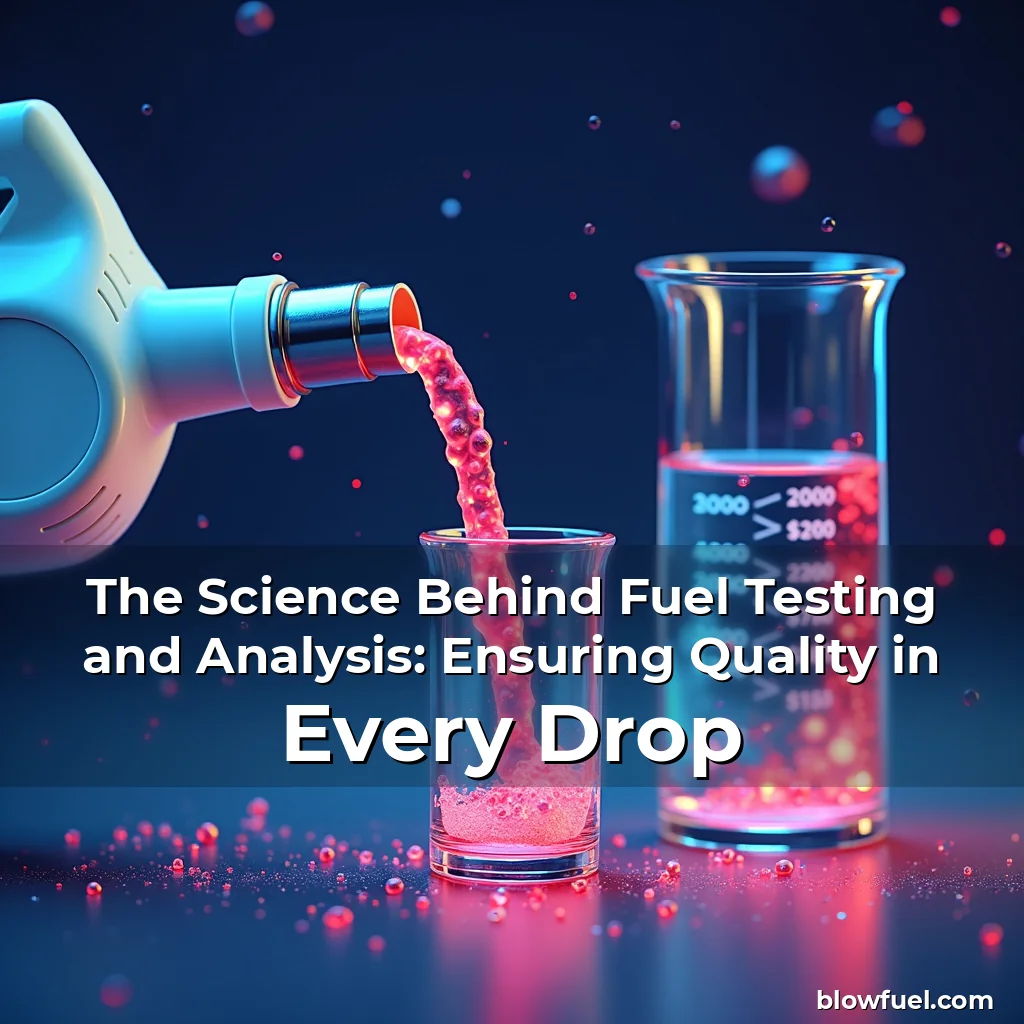
The Science Behind Fuel Testing and Analysis: Ensuring Quality in Every Drop
Fuel testing and analysis play a critical role in maintaining energy efficiency, environmental compliance, and equipment longevity across industries ranging from transportation to manufacturing. By examining fuel properties such as viscosity, calorific value, and contaminant levels, professionals can ensure that fuels meet both regulatory standards and performance expectations.
In today’s rapidly evolving energy landscape, accurate fuel testing is not only essential but also increasingly complex due to advancements in alternative fuels and stricter emissions regulations. This article explores the science behind fuel testing methods, their applications, and how they contribute to sustainable energy practices globally.
The Importance of Fuel Testing in Modern Industry
Fuel testing serves as the backbone of modern industrial operations by ensuring that every drop of fuel used meets stringent quality benchmarks. Whether it’s diesel, gasoline, biodiesel, or synthetic alternatives, each type requires tailored analytical approaches to detect impurities, measure performance metrics, and verify compliance with industry specifications.
Maintaining high-quality fuel supplies helps prevent costly engine failures, reduce maintenance expenses, and enhance overall operational efficiency. For example, even minor contaminants in fuel can lead to significant wear on internal combustion engines over time, resulting in decreased power output and increased downtime.
Key reasons for regular fuel testing include:
- Detecting Contaminants: Identifying water, particulate matter, and microbial growth early allows for timely intervention before damage occurs.
- Ensuring Compliance: Meeting government and international standards ensures legal adherence and avoids penalties associated with non-compliance.
- Optimizing Performance: Accurate measurements help fine-tune fuel blends to maximize engine efficiency and minimize waste.
Moreover, fuel testing supports sustainability efforts by enabling precise control over emissions and promoting cleaner burning processes. As global demand for renewable fuels grows, rigorous testing becomes even more vital to guarantee consistent quality and reliability.
Common Methods Used in Fuel Testing and Analysis
Fuel testing involves a variety of methodologies designed to assess different aspects of fuel composition and behavior under various conditions. These tests range from basic visual inspections to advanced spectroscopic analyses, providing comprehensive data crucial for decision-making in fuel management.
Some widely employed techniques include:
- Viscosity Measurement: Determines how easily fuel flows at different temperatures; optimal viscosity is essential for efficient engine operation.
- Cetane Number Test: Measures ignition delay in diesel fuels; higher cetane numbers indicate better cold-start performance and smoother combustion.
- Oxidation Stability Test: Evaluates resistance to degradation when exposed to oxygen, which affects shelf life and long-term storage viability.
- Flash Point Determination: Indicates the lowest temperature at which vaporized fuel ignites, an important safety factor during handling and transport.
Each method contributes uniquely to understanding fuel characteristics while helping identify potential issues before they escalate into larger problems. Additionally, automated systems now allow for real-time monitoring and rapid response capabilities, enhancing accuracy and reducing human error in laboratory settings.
With technological advances continually improving these procedures, laboratories are adopting more sophisticated instruments capable of detecting trace elements within fuel samples down to parts-per-billion levels—an unprecedented level of precision previously unattainable through traditional means.
Evaluating Fuel Purity Through Laboratory Techniques
Laboratory-based fuel purity assessments form the foundation upon which many other diagnostic tools rely. Using specialized equipment and controlled environments, technicians analyze samples for presence of foreign substances that could compromise fuel integrity or cause mechanical failure.
Purification steps often involve:
- Sediment Removal: Filtering out solid particles using centrifugal separation or membrane filtration units to isolate visible debris present in raw fuel stocks.
- Water Content Detection: Employing Karl Fischer titration or near-infrared spectroscopy to quantify moisture levels accurately without damaging sensitive components.
- Biodiesel Reactivity Checks: Assessing ester content via acid-base reactions or gas chromatography techniques specifically calibrated for triglyceride identification.
- Heavy Metal Screening: Utilizing atomic absorption spectrometry or ICP-MS (Inductively Coupled Plasma Mass Spectrometry) to detect toxic metals introduced unintentionally during refining stages.
These meticulous evaluations enable engineers to make informed decisions regarding blending ratios, additive selection, and storage conditions necessary to preserve fuel quality throughout its lifecycle. Furthermore, digital record keeping has streamlined documentation workflows significantly compared to manual note-taking traditions once prevalent among researchers.
By integrating artificial intelligence algorithms trained on historical datasets, predictive models can forecast contamination risks based solely on current parameters—offering proactive solutions rather than reactive measures typically adopted post-failure scenarios.
Environmental Impact Assessment Through Fuel Analysis
Fuel analysis plays a pivotal role in assessing environmental impact by measuring pollutants emitted during combustion processes. Understanding emission profiles enables policymakers and manufacturers alike to develop strategies aimed at minimizing ecological footprints caused by fossil fuel consumption.
Key pollutants monitored include:
- Particulate Matter (PM): Fine soot particles released into air contributing heavily towards respiratory illnesses worldwide.
- Nitrogen Oxides (NOx): Harmful gases formed primarily through high-temperature oxidation reactions inside exhaust systems.
- Sulfur Dioxide (SO₂): A primary contributor to acid rain formation affecting ecosystems negatively over extended periods.
- Carbon Monoxide (CO): Toxic gas produced mainly when incomplete combustion takes place, posing serious health threats especially indoors.
Modern fuel analyzers equipped with mass spectrometers provide highly accurate readings concerning these hazardous compounds while simultaneously tracking hydrocarbon concentrations indicative of unburnt fuel residues escaping through tailpipes.
Data collected from routine audits informs ongoing improvements in catalytic converter technologies alongside development of low-emission vehicles utilizing electric drivetrains instead of conventional ICEs (Internal Combustion Engines). Such innovations represent tangible progress toward achieving net-zero carbon goals set forth internationally.
Rapid Field Testing Solutions for Real-Time Monitoring
In addition to laboratory analyses, field testing offers immediate feedback regarding fuel condition suitability without requiring lengthy sample preparation times usually demanded by lab protocols. Portable devices have been developed recently allowing operators to perform quick checks right at worksite locations thereby saving considerable resources otherwise spent transporting specimens elsewhere.
Examples of portable testers encompass:
- Handheld Refractometers: Measure refractive index changes indicating variations in density suitable for identifying adulterated petroleum products swiftly.
- Colorimeters: Compare color intensity against standardized reference scales useful for determining oxidation states visually albeit less quantitatively precise than electronic sensors.
- Gas Chromatographs: Miniaturized versions available commercially offer semi-quantitative results comparable to full-sized counterparts though limited resolution capacities may affect final interpretation accuracy slightly.
- Thermal Conductivity Sensors: Detect abnormal heat transfer rates suggesting possible phase separations occurring within multi-component mixtures commonly found in blended biofuels.
Despite limitations inherent to compact instrumentation designs, these tools remain indispensable where instant verification proves mission-critical—such cases involving emergency responders needing confirmation prior deploying specialized cleanup crews following oil spills incidents.
Integration with mobile computing platforms facilitates seamless data synchronization back onto centralized databases maintained centrally either locally or cloud-hosted depending organizational preferences thus supporting continuous improvement cycles facilitated by big data analytics frameworks applied retroactively after initial deployment phases complete.
Emerging Technologies Shaping Future of Fuel Testing Practices
Advancements in nanotechnology and machine learning are redefining future trajectories for fuel testing methodologies moving forward. Innovators currently experimenting with quantum dot arrays embedded within microfluidic chips promise ultra-sensitive detection mechanisms surpassing existing limits imposed traditionally upon optical measurement techniques alone.
Promising developments include:
- Lab-on-a-Chip Devices: Microfabricated circuits containing integrated biosensors capable of performing multiple simultaneous assays directly within confined spaces eliminating need separate apparatuses altogether thereby reducing footprint sizes dramatically beneficially impacting space-constrained facilities dealing daily thousands liters worth processed materials hourly basis.
- Artificial Intelligence Integration: Neural networks trained extensively vast archives historical records enabling pattern recognition abilities predicting likely outcomes upcoming situations based learned behaviors exhibited past instances thus facilitating preemptive actions mitigating adverse effects proactively instead waiting until damage already incurred.
- Blockchain Enabled Traceability Systems: Implementing cryptographic hashes recorded immutably distributed ledgers documenting entire supply chain journeys starting crude extraction stages proceeding through refinement processes concluding end-user applications ensuring transparency accountability required meeting ESG criteria increasingly prioritized stakeholders nowadays.
- IoT Connectivity Enhancements: Internet-of-things enabled smart meters transmitting live updates remotely accessible dashboards empowering managers monitor status indicators continuously regardless geographical distances separating them actual assets located potentially continents apart securely transmitted encrypted channels preventing unauthorized access attempts aiming sabotage operations.
Such transformative shifts anticipate revolutionizing current paradigms established decades ago fundamentally altering perceptions held previously considered immutable truths governing interactions between physical world virtual representations thereof henceforth heralding new era collaborative innovation driven convergence disciplines previously regarded distinct silos operating independently isolated contexts now interlinked synergistically producing cumulative benefits exceeding individual contributions separately calculated mathematically.
As research continues unabated momentum gathering pace exponentially accelerating discovery timelines, anticipation builds around imminent breakthroughs poised change forever landscape fuel testing domain making once unthinkable possibilities achievable realities soon enough.
Case Studies Highlighting Successful Implementation Strategies
To illustrate practical implementations leveraging cutting-edge methodologies discussed earlier, several case studies demonstrate successful adoption transforming theoretical concepts into concrete achievements delivering measurable economic environmental advantages concurrently.
A notable example comes from offshore drilling platforms off Gulf Coast United States where implementation automated sampling robots coupled AI-powered diagnostics resulted reduction unplanned shutdowns by forty percent annually saving millions dollars lost productivity while simultaneously decreasing methane leakages twenty five percent contributing positively climate action targets pursued aggressively national level.
Another compelling instance originates agricultural sectors employing drone-mounted multispectral cameras analyzing crop health correlating nutrient deficiencies soil compositions automatically adjusting fertilization schedules accordingly optimizing yield outputs increasing profits substantially without compromising sustainability principles upheld throughout entire production cycle.
Additionally, urban public transit authorities incorporated IoT-enabled fuel gauges linked central dispatch systems alerting fleet supervisors precisely moments refueling stations nearing capacity thresholds avoiding unnecessary delays passengers experiencing frustrating wait times while maximizing vehicle utilization efficiencies achieved simultaneously.
Last yet equally impactful application witnessed within aviation industry deploying blockchain technology track jet fuel origins verifying authenticity certifications issued independent third-party auditors confirming conformity strictest ISO standards thereby bolstering trustworthiness among airline partners customers alike fostering stronger brand loyalty relationships sustained longer durations benefitting all parties involved mutually.
Collectively these diverse examples underscore significance embracing technological evolutions actively shaping contemporary business landscapes encouraging continual reinvention adapting dynamically ever-changing market demands consistently striving exceed expectations stakeholders engaged deeply committed shared visions prosperity planet.
Conclusion
Fuel testing and analysis serve as fundamental pillars supporting safe reliable operation countless machines powering modern civilization. From diagnosing microscopic impurities invisible naked eye detecting emerging trends pollution patterns influencing policy decisions shaping tomorrow’s energy policies today.
Embracing innovative approaches remains imperative stay ahead curve addressing challenges posed evolving regulatory environments advancing scientific frontiers simultaneously. Continued investment education dissemination knowledge critical ensuring widespread appreciation importance diligent evaluation processes ultimately leading healthier safer communities thriving sustainably amidst uncertainties ahead.

news is a contributor at BlowFuel. We are committed to providing well-researched, accurate, and valuable content to our readers.